

In many organizations, a large part of the workday is consumed by administrative and bureaucratic tasks that add little value to people’s development or business growth. A global study by McKinsey confirms that managers spend almost half their time on this type of work, instead of focusing on managing and developing talent. This everyday wear and tear raises an urgent question: how can technology free up time for talent instead of consuming it? The key lies in automating with purpose: transforming the employee experience, not just the processes.
People at the Center
When automation is designed with people at the center, the benefit goes beyond efficiency. It's not just about doing more with less, but about improving how employees experience their work: fewer routine tasks, less operational stress.
An analysis by Deloitte shows that applying artificial intelligence to processes such as recruitment, training, or performance management is already transforming the employee experience. These solutions simplify procedures, speed up access, and enable conversations based on data rather than bureaucracy.
At Ricoh Ricoh we've seen that this approach helps free up time so teams can focus on what truly generates value: innovating, learning, and creating.
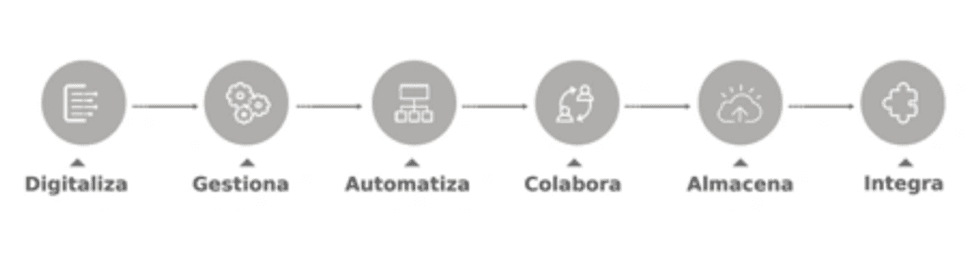
End-to-end solutions for document management — from capture to data analysis and processing — make it possible to automate processes for this purpose and to become more agile and efficient. With Ricoh Smart Flow, for example, companies don't just manage their documents — they also power up their workflows, because:
Leadership in the Digital Age
Automation is also redefining the leader's role, not only in document management but across the entire work environment. Leaders shift from being task supervisors to becoming facilitators of environments where people can grow.
This calls for new skills: strategic thinking, digital empathy, the ability to interpret data, and fostering horizontal communication. Some organizations are already using AI to identify cross-functional leadership that used to go unnoticed.
Beyond helping identify leaders, automation creates space for them to develop new skills and strengthen their role.
To make this clearer, let's consider three concrete ways technology supports leaders:
- • Reduces micromanagement: by delegating repetitive tasks to automated systems, leaders can spend more time on strategy and human support.
- • Promotes transparency: with real-time data, decisions about performance and resource allocation are fairer and clearer.
- • Strengthens mentoring: it frees up space for leaders to focus on inspiring, training, and guiding their teams, instead of policing processes.
Technology doesn't replace human leadership; it supports it and makes it more visible. A More Human Future for Companies
At Ricoh LATAM, we work alongside organizations to automate processes with purpose, building more human, inclusive, and resilient environments. Automation isn't an IT project — it's an organizational strategy that makes the difference between surviving and leading in an increasingly demanding environment. And on that path, the right support makes all the difference.
That's why we invite companies in the region to talk with Ricoh LATAM and discover how to bring this change to their workplaces, freeing up their teams' time for what really matters: helping people unleash their full potential.