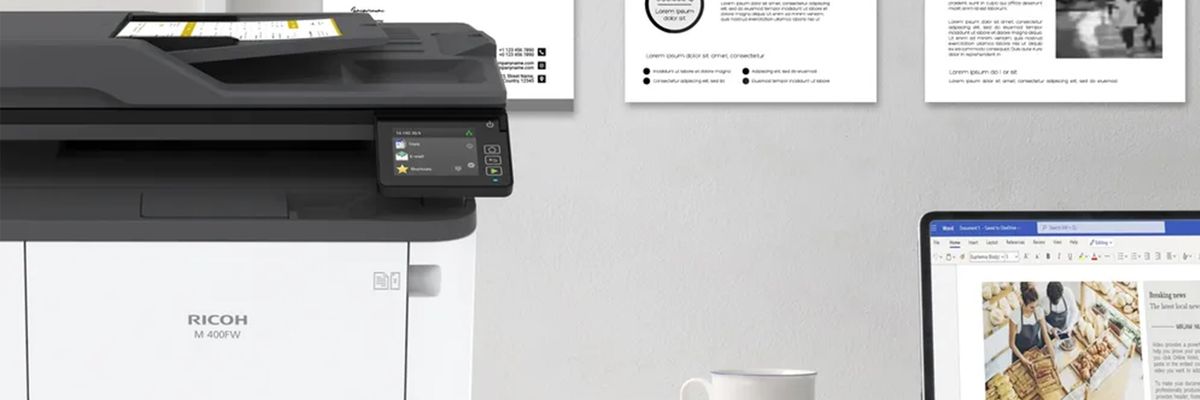


Protected information with Zero Trust applied to printing
Learn how to apply the Zero Trust model to printing to strengthen information security, reduce risks and protect documents in hybrid work environments.
Ensuring access to information and services in hybrid environments is no longer a “nice to have”: it is a must. Although progress has been made in protecting identities, endpoints, and applications, printing remains an underestimated vector. Recent reports indicate that incidents associated with unsafe printing practices continue to occur frequently, with 67% of organizations experiencing data losses in the last 12 months. The good news is that Zero Trust principles are already being adopted, with 63% of organizations worldwide reporting that they have partially or fully implemented a Zero Trust strategy, which can be effectively extended to the printing environment.
In this article, we will explore what the Zero Trust concept is all about and why it is so critical to apply it in the face of frequent information security incidents, considering its growing adoption to replace implicit trust with continuous verification. In addition to the relevance of printing security to prevent information breaches and unauthorized access in our smart workspaces.
The importance of Zero Trust in printing
Zero Trust is a model based on a clear premise: never trust by default; always verify. It is about not granting implicit trust, for example, because you are “inside a trusted network,” and requiring continuous authentication and authorization for each interaction between users, devices, applications, and data, while granting them the minimum privileges to perform their activities.
In printing, this means authenticating the user, verifying the device, and encrypting the print job communication from end to end, regardless of whether you are connecting to a known network, a mobile device, or a computer within a domain, every time. Print queues, servers, and multifunction printers (MFPs) are potential targets for real attacks: they host sensitive information, move data in and out of the perimeter, and, if not managed effectively with dynamic policies, can open doors to unauthorized access or document leaks. Modern approaches recommend robust encryption such as TLS in transit, strong authentication, secure print release (pull printing), and activity auditing, even when the user and printer are on the same subnet.
A unique, modern, and secure printing experience.
Today, there are many methods for applying Zero Trust to printing. For example, Ricoh CloudStream is a cloud-based printing and scanning platform that allows you to eliminate print servers, centralize management, and operate even a multi-brand fleet from a web interface.
Key features:
- Advanced security, aligned with Zero Trust: end-to-end encryption (from server to hardware), compatibility with authentication with external identity providers such as Ldap, Entra ID, Octa, and audit functionality for complete traceability. In addition, the solution is ISO/IEC 27001 certified.
- Centralized, multi-brand management: manage multiple devices, printers, and MFPs from a web console, with remote monitoring and updates (drivers and security patches).
- Serverless printing and driverless management: enable location-based printing and access to any printer without installing additional drivers on the endpoint, reducing support load and friction for the user. The powerful client installed on PCs and MAC computers can synchronize devices added by an administrator without the administrator or user having to intervene.
- Secure scanning from anywhere: sends scans to trusted cloud repositories (e.g., SharePoint, Google Drive, and OneDrive) or to email and enables simple scanning via One-Touch Scanning.
- Create workflows to increase productivity: With the ability to add indexes or metadata that allow documents to be named and routed appropriately with content extraction via OCR, removal of blank pages, barcode recognition, dynamic separation, and sending in different formats.
Modernizing printing is not just a trend
The market for Managed Print Services (MPS) and cloud-first platforms continues to grow: Mordor Intelligence estimates the MPS market at $49.78 billion in 2025 and projects $79.23 billion by 2030 (CAGR 9.25%), driven by cloud connectivity, hybrid working, and subscription models. At the same time, Zero Trust adoption continues to increase—61% of IT professionals say their organization has already adopted Zero Trust at some level, although only 18% have fully implemented it, indicating an opportunity to mature print domain.
Ricoh's leadership in managed services is reflected in analyst evaluations: in November 2024, IDC MarketScape positioned Ricoh in the Leaders category for Cloud Managed Print and Document Services (Hardcopy), highlighting its portfolio, implementation, extended services, and geographic presence.
Where to start when implementing Zero Trust in your business?
- Discover and classify your printing environment (devices, queues, drivers, policies), including remote locations and home offices; prioritize sensitive data and critical flows.
- Define minimum Zero Trust controls: strong authentication (MFA), encryption in transit, consumption reports, secure release, and policies based on job criteria (number of pages/single-sided printing) or context (user/role/location).
- Gradually eliminate print servers and migrate to centralized management in the cloud, starting with high-impact pilot sites.
- Integrate trusted cloud repositories (e.g., SharePoint, Google Drive, and OneDrive) and standardize document flows by department for efficient and secure digitization.
- Measure results (incidents, support time, SLAs, usage/savings) and scale; remember that Zero Trust is a journey of maturity with continuous improvements.
Printing doesn't have to be the weak link. With Ricoh CloudStream, you can modernize, simplify, and strengthen your printing environment in line with Zero Trust principles, aligning security, productivity, and user experience across your organization. Learn more and request a demo: https://www.ricoh-americalatina.com/en/products/pd/software/ricoh-cloud-stream
Sources
- Quocirca – Print Security Landscape 2024 (Excerpt): https://www.mpsmonitor.com/docs/Quocirca-Print-Security-2024_MPS-Monitor_Excerpt.pdf
- Printix – Data Security & Zero Trust (White Paper, 2024): https://printix.net/wp-content/uploads/2024/04/Printix-Data-Security-and-Compliance-White-Paper_EN_V3.pdf
- Gartner – 2024 State of Zero‑Trust Adoption Survey (public summary): https://www.gartner.com/en/documents/5286863
- Ponemon Institute – 2024 State of Zero Trust & Encryption Study: https://www.entrust.com/sites/default/files/documentation/reports/entrust-ponemon-institute-2024.pdf
- Mordor Intelligence – Managed Print Services Market (2025–2030): https://www.mordorintelligence.com/industry-reports/managed-print-services-market
- IDC MarketScape – Cloud Managed Print and Document Services 2024 (Recognition for Ricoh): https://www.ricoh-americalatina.com/en/newsroom/ricoh-named-leader-idc-marketscape
- IDC – Latin America Semiannual Managed Print and Document Services Tracker: https://my.idc.com/getdoc.jsp?containerId=IDC_P29601
- Brochure CloudStream: https://roar-assets-auto.rbl.ms/files/82505/Ricoh%20CloudStream%20-%20Brochure%20Web%20-%20EN.pdf
- Ricoh LATAM – CloudStream press release: https://www.ricoh-americalatina.com/en/newsroom/ricoh-latam-launches-cloudstream